 SAPPHIRE BANK
BLUE SAPPHIRE PRICE PER CARAT IN 2026
Blue sapphires span one of the widest price ranges of any gemstone category. A commercial-grade heated blue sapphire might sell for $300 per carat. An unheated, cornflower blue, certified Ceylon sapphire of five carats can fetch $20,000 per carat. Understanding why requires understanding the four factors that drive price: origin, color, heat treatment, and size.
PRICE BY ORIGIN
Origin is the single largest driver of price premium for investment-grade sapphires. The same color and quality in a Kashmir stone versus a Madagascar stone can differ by a factor of 10 or more. Here is how the major origins compare:
HEAT TREATMENT: THE BIGGEST PRICE VARIABLE
Heat treatment is applied to roughly 95% of all sapphires traded commercially. The process improves color and reduces the appearance of inclusions. It is permanent, stable, and widely accepted for commercial jewelry. But in the investment market, it is a dramatic value discount.
An unheated blue sapphire with laboratory confirmation of "no indications of heating" typically commands a 2–5× premium over an equivalent heated stone. At the investment grade level, this premium can be even larger. A 5-carat unheated cornflower blue Ceylon sapphire certified by GRS might sell for $18,000 per carat. The same color in a heated stone would be $4,000–$6,000 per carat.
The reasoning is simple: unheated status is permanent, verifiable, and cannot be replicated. Once confirmed by a top laboratory, the stone carries that status forever. Heated stones are more abundant and can always be produced to order; unheated stones of fine color are a finite natural resource.
PRICE BY COLOR QUALITY
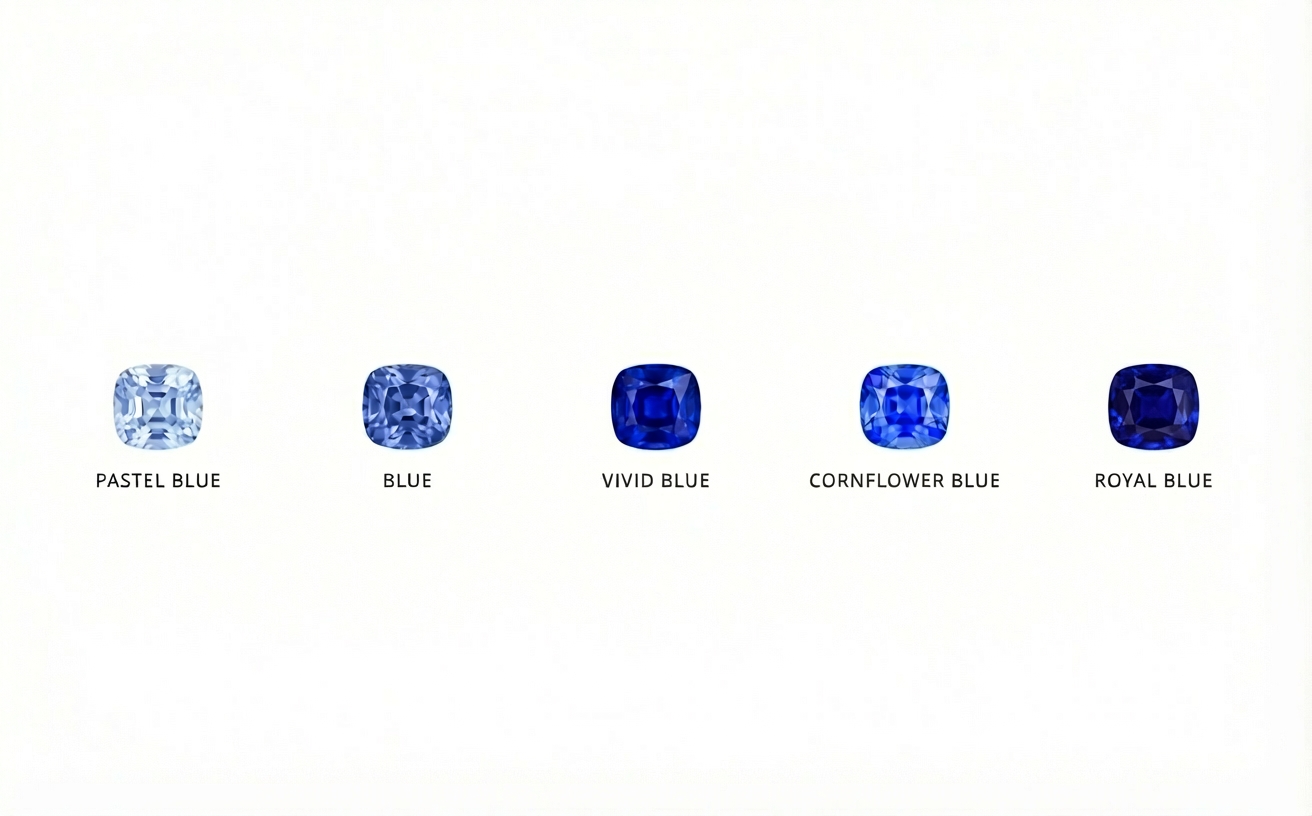
Color grade directly determines price. Cornflower and Royal Blue command the highest premiums.
Within a given origin and heat treatment status, color is the primary differentiator. For Ceylon sapphires specifically — the most liquid investment-grade blue sapphire market — here is how color quality maps to price:
HOW SIZE AFFECTS PRICE PER CARAT
Blue sapphires do not price linearly by carat weight. Larger stones are exponentially rarer, and price per carat escalates sharply above certain weight thresholds.
The most significant jump occurs at 3 carats and again at 5 carats. A 1-carat unheated cornflower blue Ceylon might be $4,000 per carat. The same quality at 3 carats could be $10,000 per carat. At 5 carats, $18,000 per carat. The stone's total value grows non-linearly with weight.
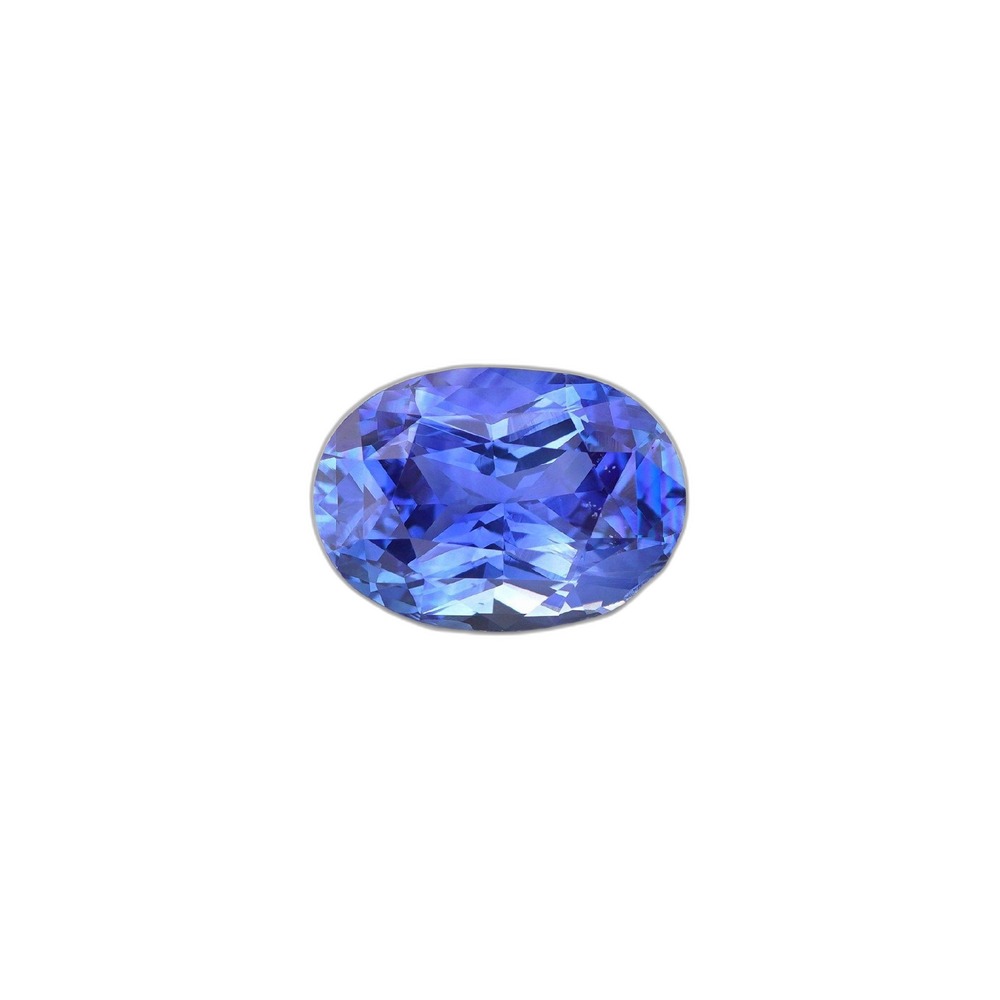
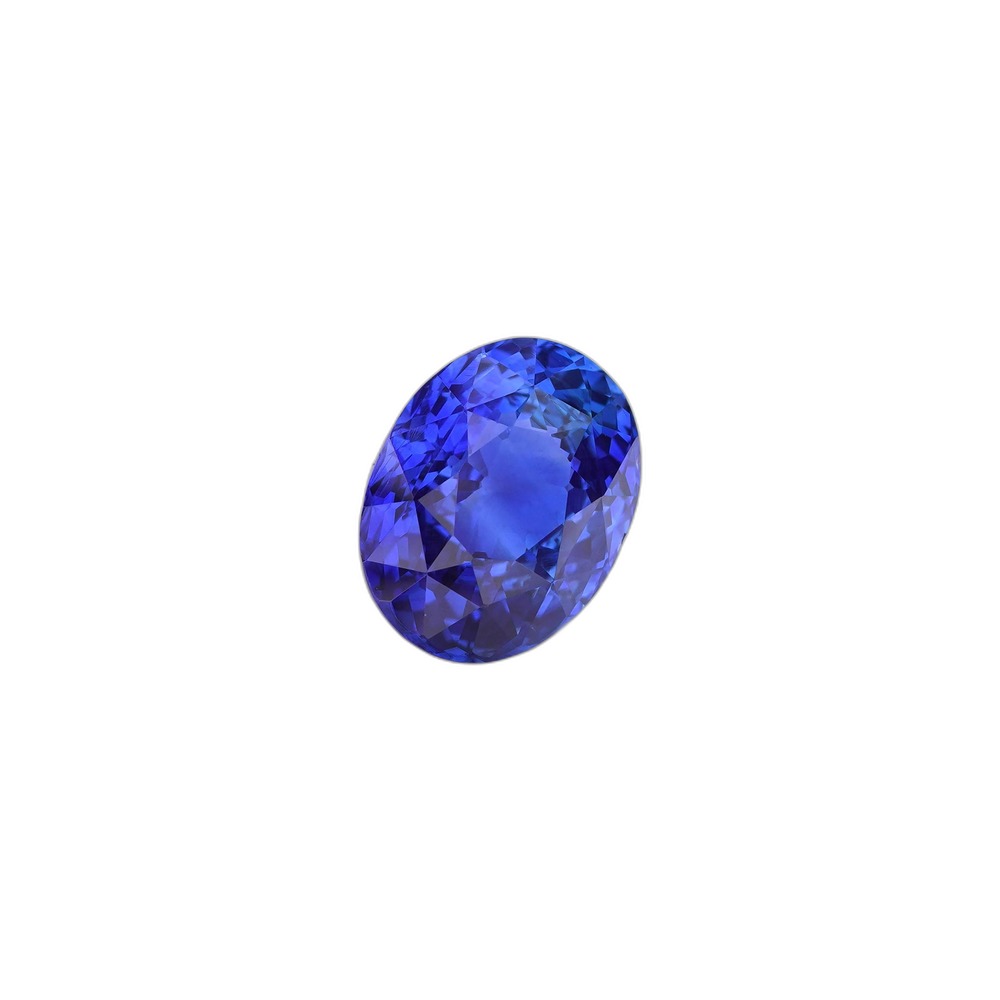
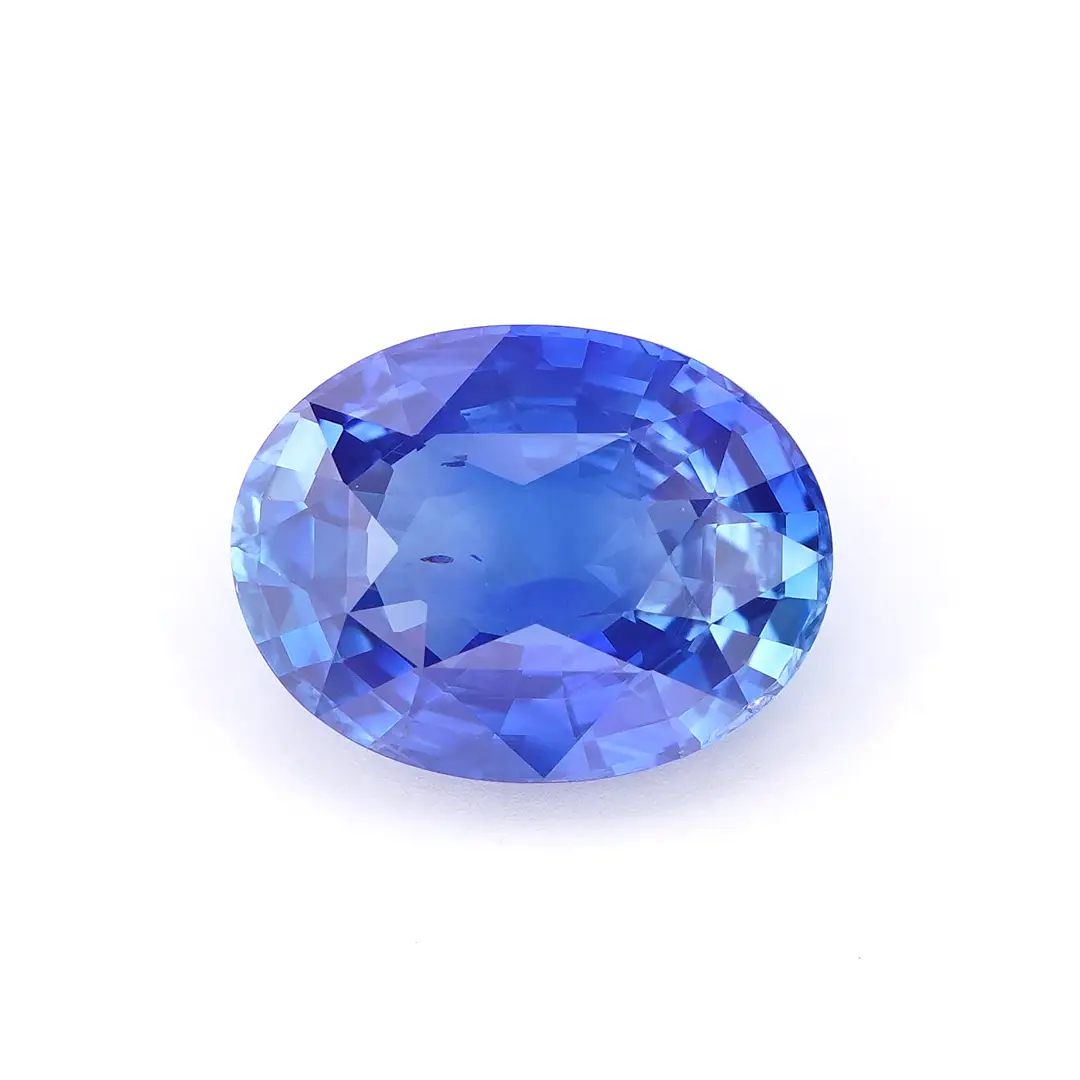
This size premium is particularly pronounced for investment-grade material. Commercial heated sapphires price more linearly because they are more readily available at all sizes. Unheated stones of fine color become dramatically rarer above 3 carats, and the market prices this scarcity directly. For a concrete example, our SPH-005 Cornflower Blue Sapphire · 5.55ct and SPH-003 Midnight Kashmir · 4.05ct illustrate this pricing dynamic at current market levels.
WHERE TO BUY AND WHAT TO PAY
Auction houses (Sotheby's, Christie's, Bonhams) offer price transparency and verified provenance. Buyer's premiums of 20–25% apply. Best for top investment-grade material above $20,000.
Specialist dealers offer more flexibility and can source specific qualities on request. Prices are negotiable but less transparent than auction results. Require GRS or Gübelin certification as a minimum.
Online platforms carry significant quality risk. Without physical inspection and independent lab certification, buying investment sapphires online is not recommended for meaningful amounts.
Regardless of purchase channel, the rule is the same: no certified unheated blue sapphire should be purchased without a current GRS or Gübelin certificate. The cost of certification ($150–$500 per stone) is trivial relative to the value assurance it provides.
FREQUENTLY ASKED QUESTIONS
What is the average blue sapphire price per carat in 2026?
Prices range from $200/ct for commercial heated stones to over $200,000/ct for exceptional unheated Kashmir. Origin, color grade, and heat treatment are the three primary price drivers.
How much does unheated status add to sapphire price?
An unheated sapphire typically commands 2–5× over an equivalent heated stone. A 5-carat unheated cornflower blue Ceylon can sell for $18,000/ct versus $4,000–6,000/ct for the same color in a heated stone.
At what carat weight do sapphire prices jump significantly?
The most dramatic price-per-carat increases occur at 3 carats and again at 5 carats, reflecting the exponential rarity of large fine sapphires. A 1ct unheated cornflower blue might be $4,000/ct; the same quality at 5ct reaches $18,000/ct.
Which origin commands the highest blue sapphire price?
Kashmir commands $10,000–$200,000+/ct, followed by Burma at $3,000–$50,000/ct, then Ceylon at $800–$25,000/ct for investment-grade certified material.
RELATED GUIDES
VIEW BLUE SAPPHIRES
The Sapphire Bank offers investment-grade blue sapphires with full provenance disclosure and laboratory documentation on request. Browse current inventory, including our 5.55ct Cornflower Blue and 4.05ct Midnight Kashmir.
BROWSE SAPPHIRES