 SAPPHIRE BANK
Blue Sapphire Buying Guide
The king of colored gemstones. Loose blue sapphires have been treasured for millennia—worn by royalty, coveted by collectors, and increasingly sought after as alternative investments. Here's what you need to know before buying a loose blue sapphire.
AT A GLANCE
What is a Sapphire?
Sapphires are gem-quality corundum—the same mineral as rubies. The only difference is color: red corundum is ruby, everything else is sapphire. While blue is the classic, sapphires come in every color imaginable: pink, yellow, orange, green, purple, and the rare padparadscha (a pink-orange blend).
With a hardness of 9 on the Mohs scale, sapphires are second only to diamonds in durability. This makes them ideal for jewelry that's meant to be worn—and passed down through generations.
Origins Matter
Unlike diamonds, where origin is rarely discussed, a sapphire's provenance significantly impacts its value. The same quality stone can command vastly different prices depending on where it was mined.
Kashmir
The holy grail. Kashmir sapphires display a unique "velvety" or "sleepy" appearance caused by microscopic silk inclusions that scatter light. The mines in the Himalayas have been effectively depleted since the early 1900s, making these stones extraordinarily rare. Expect to pay 3-5x the price of equivalent Ceylon stones—if you can find one.
Burma (Myanmar)
Burmese sapphires are known for their intense, saturated "royal blue" color. The Mogok region produces stones with exceptional depth and a slight purple undertone that collectors prize. Political instability has complicated sourcing, adding to their mystique and value.
Ceylon
The workhorse of fine sapphires. Ceylon stones typically display a lighter, more brilliant blue—often called "cornflower blue." Ceylon has been producing sapphires for over 2,000 years and remains the most consistent source of high-quality material. The best value in investment-grade sapphires.
Madagascar
A relatively new but significant source (discovered in the 1990s), Madagascar produces excellent blue sapphires with vivid saturation that rival Ceylon and even Burma in quality. The Ilakaka deposit has become one of the world's most important sapphire sources. Savvy collectors recognize the exceptional value—top Madagascar stones offer investment potential at more accessible prices.
Understanding Color
Color is the single most important factor in sapphire valuation. It's assessed across three dimensions: hue, saturation, and tone.
Hue is the basic color—blue, violet-blue, greenish-blue, etc. Pure blue is most valuable, though slight violet undertones are acceptable (and sometimes preferred in Burmese stones).
Saturation refers to color intensity. "Vivid" and "intense" saturations command the highest prices. Avoid stones that appear grayish or washed out.
Tone describes how light or dark the stone appears. Medium to medium-dark tones are ideal. Too light looks watery; too dark appears black in low light.
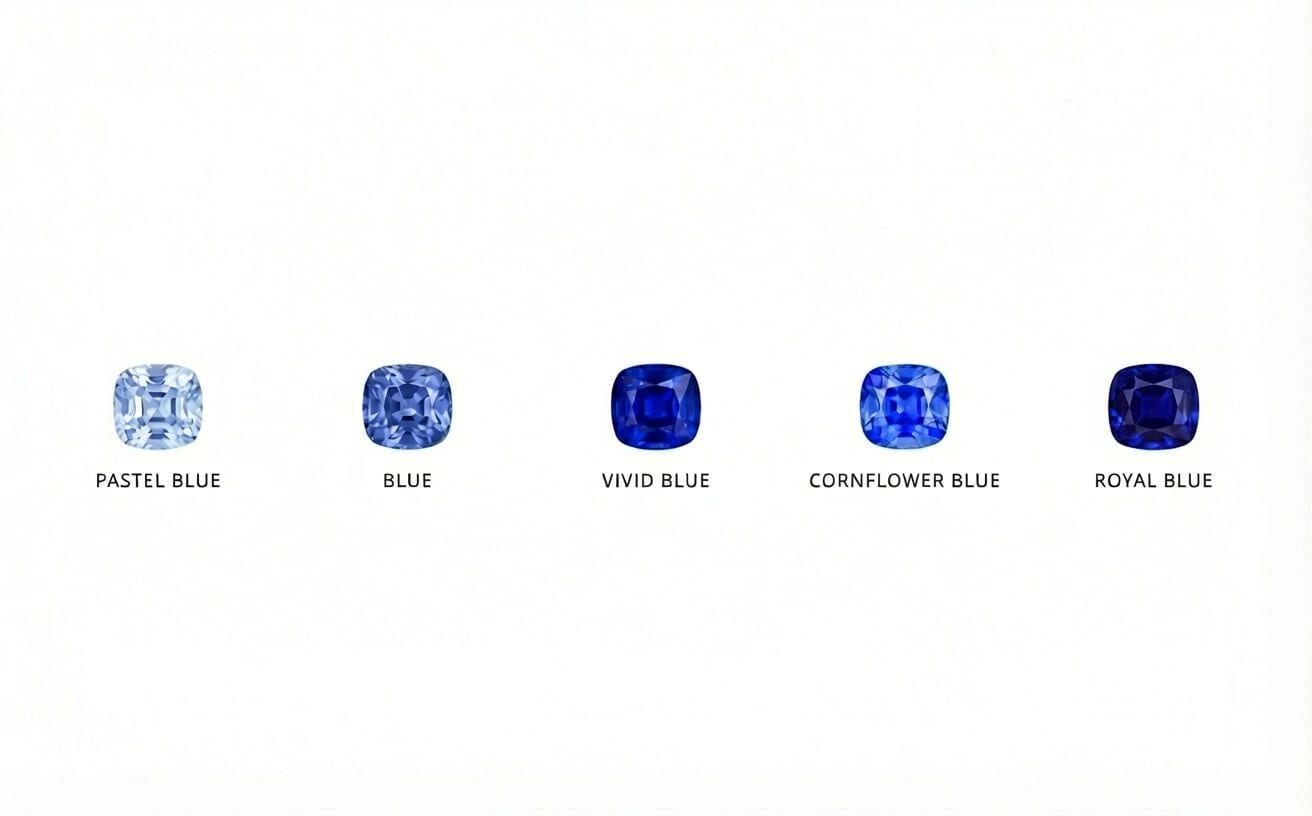
"Vivid" or "Intense" saturation • Medium to medium-dark tone • Pure blue to slightly violet-blue hue
Heated vs. Unheated
The vast majority of sapphires on the market—estimates range from 90-95%—have been heat treated. This is an industry-accepted practice that improves color and clarity by dissolving silk inclusions and intensifying blue tones.
Unheated sapphires are significantly rarer and command premiums of 20-50% or more. For investment purposes, we strongly recommend unheated stones—they're more desirable to collectors and hold value better over time.
Always verify treatment status through a reputable gemological laboratory such as GRS, Gübelin, SSEF, GIA, or similar accredited labs.
What Collectors Look For
Investment-grade sapphires share certain characteristics. Here's what separates a $1,000/carat stone from a $10,000/carat stone:
Vivid saturation, ideal tone, minimal secondary hues
Certified unheated by a reputable lab (GRS, GIA, Gübelin, etc.)
Kashmir, Burma, or fine Ceylon with origin report
No visible inclusions to the naked eye
2+ carats for investment; 5+ carats for serious collectors
Price Expectations
Sapphire pricing is highly variable. A 3-carat stone could cost $3,000 or $300,000 depending on quality factors. Here are rough benchmarks for investment-grade material:
| ORIGIN | QUALITY | $/CARAT |
|---|---|---|
| Ceylon | Fine, Unheated | $3,000 – $8,000 |
| Ceylon | Exceptional, Unheated | $8,000 – $15,000 |
| Burma | Fine, Unheated | $8,000 – $20,000 |
| Burma | Exceptional, Unheated | $20,000 – $50,000+ |
| Kashmir | Any Quality | $15,000 – $100,000+ |
Prices as of 2025. Exceptional stones regularly exceed these ranges at auction.
Why Sapphires Over Diamonds?
Diamonds are heavily marketed but poorly suited for investment. The market is controlled by a handful of players, resale values are typically 30-50% of retail, and supply is abundant (despite what De Beers would have you believe).
Fine sapphires, by contrast, are genuinely rare. There's no central authority controlling supply. Each stone is unique. And the market is driven by collectors and connoisseurs, not marketing campaigns.
Over the past 20 years, investment-grade colored gemstones have consistently outperformed diamonds, with top sapphires appreciating 5-10% annually.
Ready to Buy?
Every sapphire in The Sapphire Bank collection is hand-selected for investment potential. Treatment and origin fully disclosed, certification on request at purchase, and backed by our 12-month buyback guarantee.
VIEW SAPPHIRES