 SAPPHIRE BANK
Ruby Buying Guide
The most valuable colored gemstone by weight. Loose rubies have commanded the highest per-carat prices at auction, with exceptional Burmese stones exceeding $1 million per carat. Here's what you need to know before buying a loose ruby.
AT A GLANCE
What is a Ruby?
Rubies are red corundum—the same mineral as sapphires. The red color comes from chromium, and only stones with sufficient saturation qualify as rubies. Lighter red corundum is classified as pink sapphire, though the exact boundary varies by gemological lab.
With a hardness of 9 on the Mohs scale, rubies share sapphires' exceptional durability. Combined with their rarity and historical significance, this makes them the most valuable colored gemstones in the world.
Origins Matter
Origin is paramount for rubies. A Burmese ruby can command 5-10x the price of an equivalent stone from other sources. The difference lies in trace elements that affect color, fluorescence, and that intangible quality collectors call "life."
Burma (Myanmar)
The gold standard. Burmese rubies from the Mogok Valley display the coveted "pigeon blood" color—a pure red with a hint of blue, combined with strong fluorescence that makes the stone glow in daylight. The mines have produced for centuries but fine material is increasingly scarce. Political sanctions have complicated sourcing, adding to premiums.
Mozambique
The rising star. Discovered in the 2000s, Mozambique rubies can rival Burmese stones in color and clarity. They tend to have slightly less fluorescence and sometimes a subtle orange undertone. For investment purposes, top Mozambique material offers excellent value—prices are catching up but haven't reached Burmese levels.
Thailand
Thai rubies tend toward darker, more brownish-red tones due to higher iron content. They lack the fluorescence of Burmese stones. While historically significant, Thai rubies are generally not considered investment-grade unless exceptionally fine.
Ceylon
Ceylon rubies are typically lighter and pinker than Burmese stones. Many would be classified as pink sapphires by strict standards. When they do achieve true ruby color, they can be quite beautiful, but they command lower premiums than Burmese or top Mozambique material.
Understanding "Pigeon Blood"
"Pigeon blood" is the most coveted ruby color—a vivid, slightly bluish red that seems to glow from within. The term originated in Burma and refers to the first drop of blood from a freshly killed pigeon.
What makes pigeon blood special: It's not just the hue, but the combination of color, saturation, and fluorescence. Chromium causes both the red color and strong red fluorescence. In daylight, this fluorescence adds to the red, creating an almost electric glow.
Major labs like GRS and Gübelin issue "pigeon blood" designations, though criteria vary slightly. A certified pigeon blood ruby commands significant premiums—often 2-3x over stones graded simply as "vivid red."
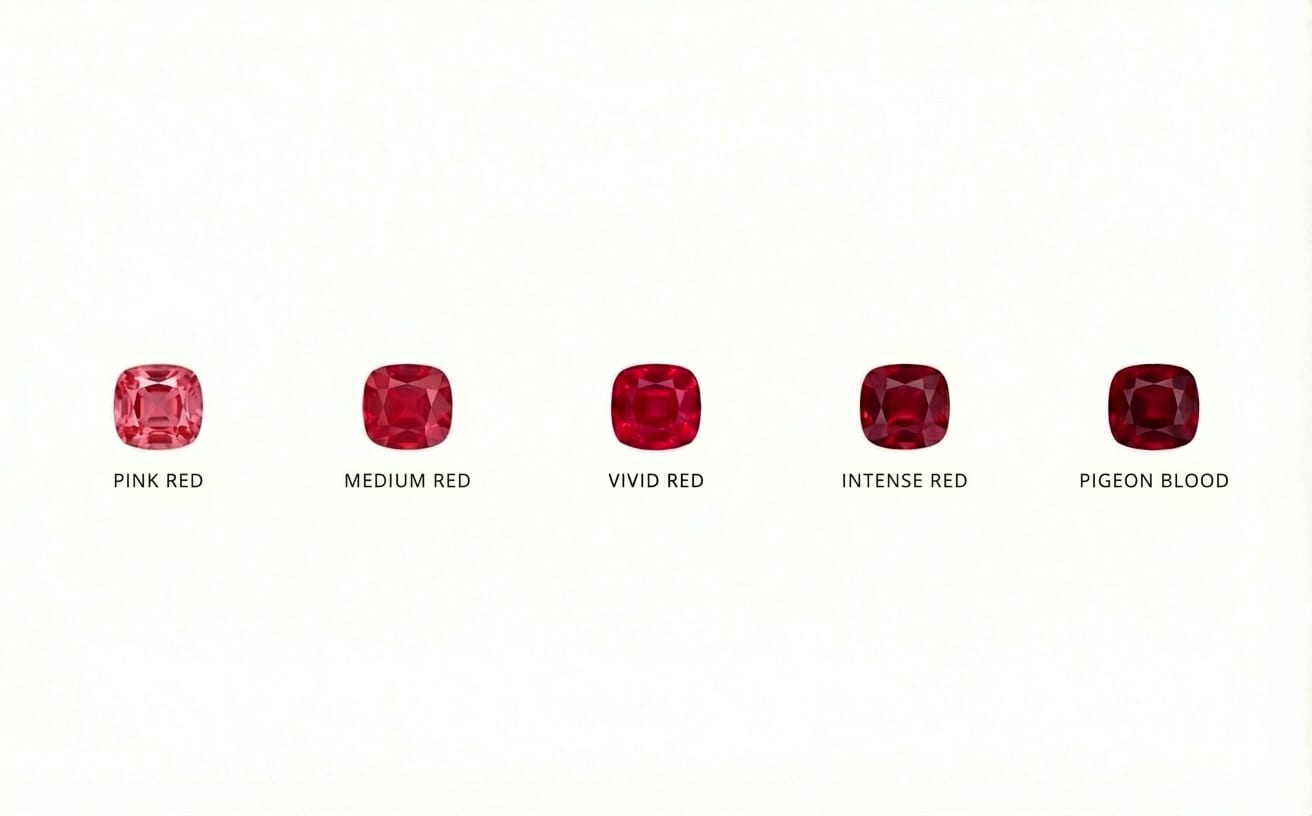
Vivid red with slight blue undertone • Strong fluorescence • Medium-dark tone • No orange or brown modifiers
Heated vs. Unheated
The treatment landscape for rubies is more complex than sapphires. Beyond simple heat treatment, many rubies undergo lead-glass filling or beryllium diffusion—treatments that significantly affect value.
Unheated rubies are extremely rare—perhaps 1-2% of the market. They command premiums of 50-100% or more over heated stones of equivalent quality. For investment, unheated is essential.
Heated (no residue) rubies have undergone traditional heat treatment to improve color. This is industry-accepted and stones are still valuable, though less so than unheated.
Avoid: Lead-glass filled rubies (often called "composite rubies") and beryllium-treated stones. These treatments are not stable and significantly reduce value. Always verify treatment status with a reputable lab.
What Collectors Look For
Investment-grade rubies are rarer than investment-grade sapphires. Here's what separates a $5,000/carat stone from a $50,000/carat stone:
Vivid red with blue undertone, strong fluorescence, certified by major lab
Certified unheated—this alone can double value
Mogok Valley provenance with origin report
Rubies are rarely flawless; eye-clean is exceptional
Fine rubies over 2ct are extremely rare; over 5ct is museum-quality
Price Expectations
Ruby pricing is the most variable of all gemstones. A 3-carat ruby could cost $3,000 or $3,000,000 depending on quality factors. Here are rough benchmarks:
| ORIGIN | QUALITY | $/CARAT |
|---|---|---|
| Mozambique | Fine, Heated | $2,000 – $8,000 |
| Mozambique | Fine, Unheated | $5,000 – $15,000 |
| Burma | Fine, Heated | $10,000 – $30,000 |
| Burma | Fine, Unheated | $20,000 – $80,000 |
| Burma | Pigeon Blood, Unheated | $50,000 – $500,000+ |
Prices as of 2025. Record auction prices for exceptional Burmese rubies have exceeded $1 million per carat.
Ruby vs. Sapphire for Investment
Both are corundum, both are excellent for investment—but they serve different purposes in a gemstone portfolio.
Rubies offer higher potential returns but require larger capital. A truly investment-grade ruby rarely costs less than $50,000. The market is smaller and more specialized.
Sapphires offer more accessible entry points. You can acquire investment-grade Ceylon sapphires for $10,000-$30,000. The market is larger and more liquid.
For most collectors, we recommend starting with sapphires and adding rubies as your portfolio grows. The exception: if you find an exceptional unheated Burmese ruby at a fair price, don't hesitate.
Ready to Buy?
Every ruby in The Sapphire Bank collection is hand-selected for investment potential. Treatment and origin fully disclosed, certification on request at purchase, and backed by our 12-month buyback guarantee.
VIEW RUBIES