 SAPPHIRE BANK
Padparadscha Buying Guide
The collector's sapphire. Padparadscha is the rarest variety of corundum—a delicate blend of pink and orange that evokes the lotus flower. Genuine padparadschas are so scarce that most gem dealers go years without seeing one. Here's what you need to know.
AT A GLANCE
What is a Padparadscha?
Padparadscha (pad-pah-RAD-sha) is a rare variety of sapphire displaying a unique pink-orange color. The name comes from the Sinhalese word for "lotus flower"— specifically the Ceylonese lotus, which blooms in shades of salmon pink.
Unlike blue sapphires (colored by iron and titanium) or rubies (colored by chromium), padparadscha gets its distinctive hue from a delicate combination of chromium and iron. This precise balance is extraordinarily rare in nature.
The color must be neither too pink (that's a pink sapphire) nor too orange (that's an orange sapphire). It must be both simultaneously—a sunset captured in stone.
The Color Debate
What exactly qualifies as "padparadscha" is hotly debated. Different labs have different standards, and the boundaries are genuinely subjective.
The traditional view: A true padparadscha must show a delicate, light to medium-toned pink-orange with both colors clearly visible. Neither pink nor orange should dominate.
The expanded view: Some labs accept stones with more pink or more orange, as long as both components are present. This has led to "padparadscha" being applied to stones that purists would reject.
For investment purposes, seek stones that would be accepted as padparadscha by multiple labs. Major labs like GRS, Gübelin, SSEF, and GIA all issue padparadscha designations, but their criteria differ slightly.
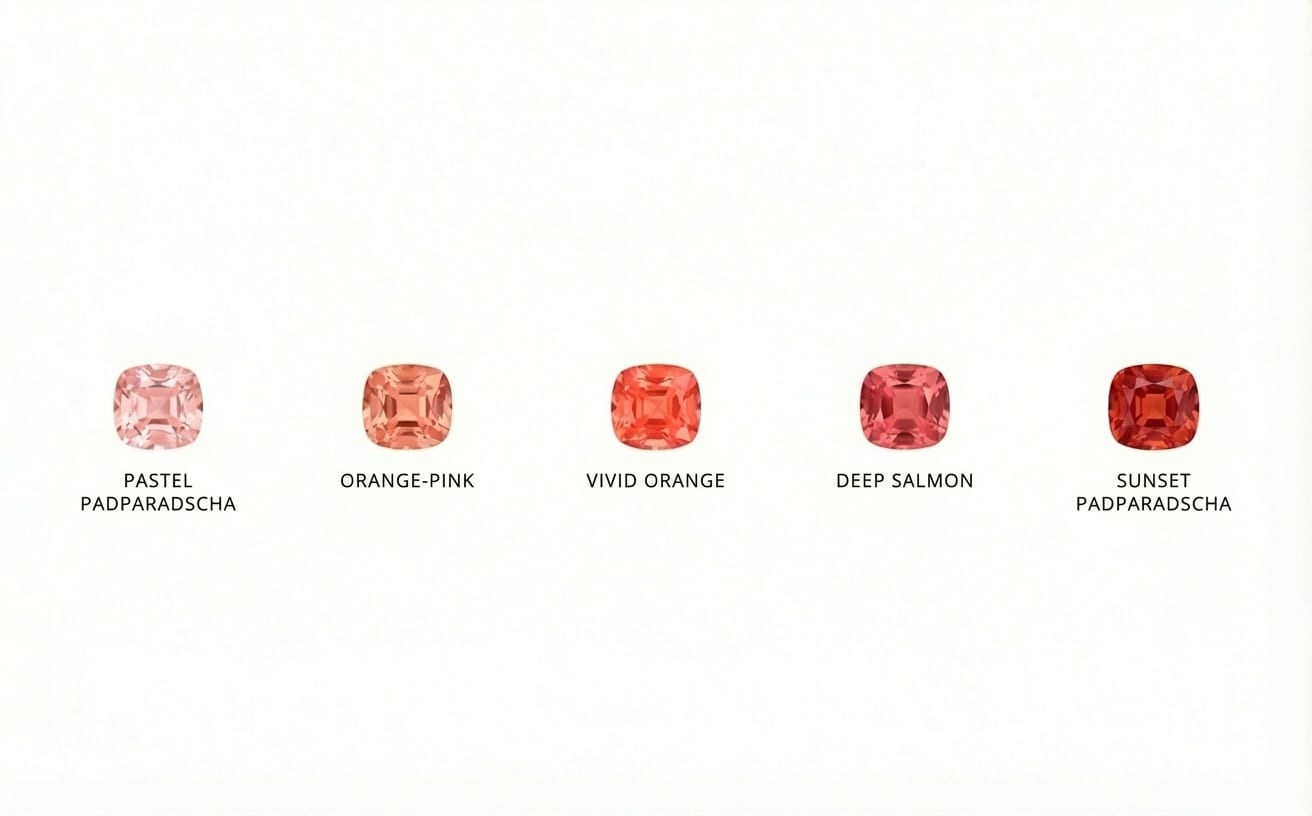
Delicate pink-orange • Light to medium tone • Both colors equally visible • No brown or gray modifiers
Origins
Ceylon is the spiritual home of padparadscha—the name itself is Sinhalese. Ceylon padparadschas command the highest premiums and are considered the benchmark.
Ceylon
The classic source. Ceylon padparadschas typically display a softer, more pastel coloration with excellent light performance. The alluvial deposits have been worked for centuries, and fine material is increasingly scarce. Origin alone adds 20-30% to value.
Madagascar
Madagascar produces padparadscha-colored sapphires, though purists debate whether they should carry the name. The color can be slightly more saturated than Ceylon material. Prices are lower, making them accessible entry points for collectors.
Tanzania
Occasionally produces stones in the padparadscha color range, though these are rarely certified as such by major labs. Typically more orange-dominant.
Treatments: The Critical Factor
Treatment status is even more critical for padparadscha than for other sapphires. The delicate color balance can be created or enhanced through various treatments, dramatically affecting value.
Unheated: The most valuable. Natural padparadscha color without any treatment is extraordinarily rare—perhaps 1% of stones on the market. Premiums of 100-200% over heated stones.
Low-temperature heated: Gentle heating can improve clarity without significantly altering color. Accepted by most collectors, though valued less than unheated.
Beryllium-treated: Beryllium diffusion can create padparadscha colors in otherwise worthless material. These stones have minimal investment value and should be avoided. Always verify treatment with a reputable lab.
What Collectors Look For
Investment-grade padparadschas are among the rarest gemstones in the world. Here's what separates exceptional stones from merely good ones:
Pink and orange in equal measure, neither dominating
Certified unheated with no beryllium detection
Ceylonese provenance with origin report
No visible inclusions—critical for light colors
Fine padparadschas over 3ct are museum-worthy
Price Expectations
Padparadscha pricing reflects their extreme rarity. Even modest stones command significant premiums over comparable pink or orange sapphires.
| ORIGIN | QUALITY | $/CARAT |
|---|---|---|
| Madagascar | Good, Heated | $2,000 – $5,000 |
| Ceylon | Fine, Heated | $5,000 – $15,000 |
| Ceylon | Fine, Unheated | $15,000 – $30,000 |
| Ceylon | Exceptional, Unheated | $30,000 – $50,000 |
| Ceylon | Museum Quality, Unheated | $50,000 – $100,000+ |
Prices as of 2025. Exceptional unheated Ceylon padparadschas over 5ct have sold for over $100,000/ct at auction.
Why Padparadscha for Investment?
Padparadschas occupy a unique position in the gemstone market. They're rarer than rubies, more distinctive than sapphires, and increasingly recognized by collectors worldwide.
Supply is finite: Unlike blue sapphires, which come from multiple major sources, true padparadschas are essentially limited to Ceylon. New deposits are unlikely.
Demand is growing: Asian markets— particularly Japan and increasingly China—have long appreciated padparadscha. Western collectors are catching up.
Recognition is expanding: As more collectors learn about padparadscha, competition for fine stones intensifies. Early movers in this market have seen exceptional returns.
Ready to Buy?
Padparadschas are rare in our collection—we acquire only a few each year. Each is fully disclosed with certification on request at purchase, and backed by our 12-month buyback guarantee.
VIEW PADPARADSCHA