 SAPPHIRE BANK
SAPPHIRE INVESTMENT IN 2026
Sapphires have quietly outperformed most traditional asset classes at the investment grade over the past two decades. Kashmir sapphires have appreciated 10–15% annually on average since 2000. Ceylon cornflower blue, 6–10%. These are not liquid, market-traded returns — but for patient capital, the case for sapphires in 2026 remains as strong as it has ever been.
THE 2026 MARKET CONTEXT
The investment-grade colored stone market entered 2026 in a phase of consolidation after strong appreciation in 2021–2023. Prices for top Kashmir and Ceylon sapphires remain at historically high levels, but the fever-pitch demand of 2021–2022 — driven partly by post-pandemic wealth effects and partly by surge in interest from new Asian buyers — has moderated.
What this means for buyers: 2026 is not a moment of distress pricing, but it is more rational than the peak. Sellers are negotiating again. Exceptional stones that would have gone immediately in 2022 are available with some patience. For serious buyers, this is a healthier environment than the recent peak.
The structural drivers — fixed supply of Kashmir, limited Ceylon production, growing global collector base, no lab-grown competition at the investment grade — remain intact. Nothing about the underlying investment thesis has changed.
WHICH SAPPHIRES TO BUY IN 2026
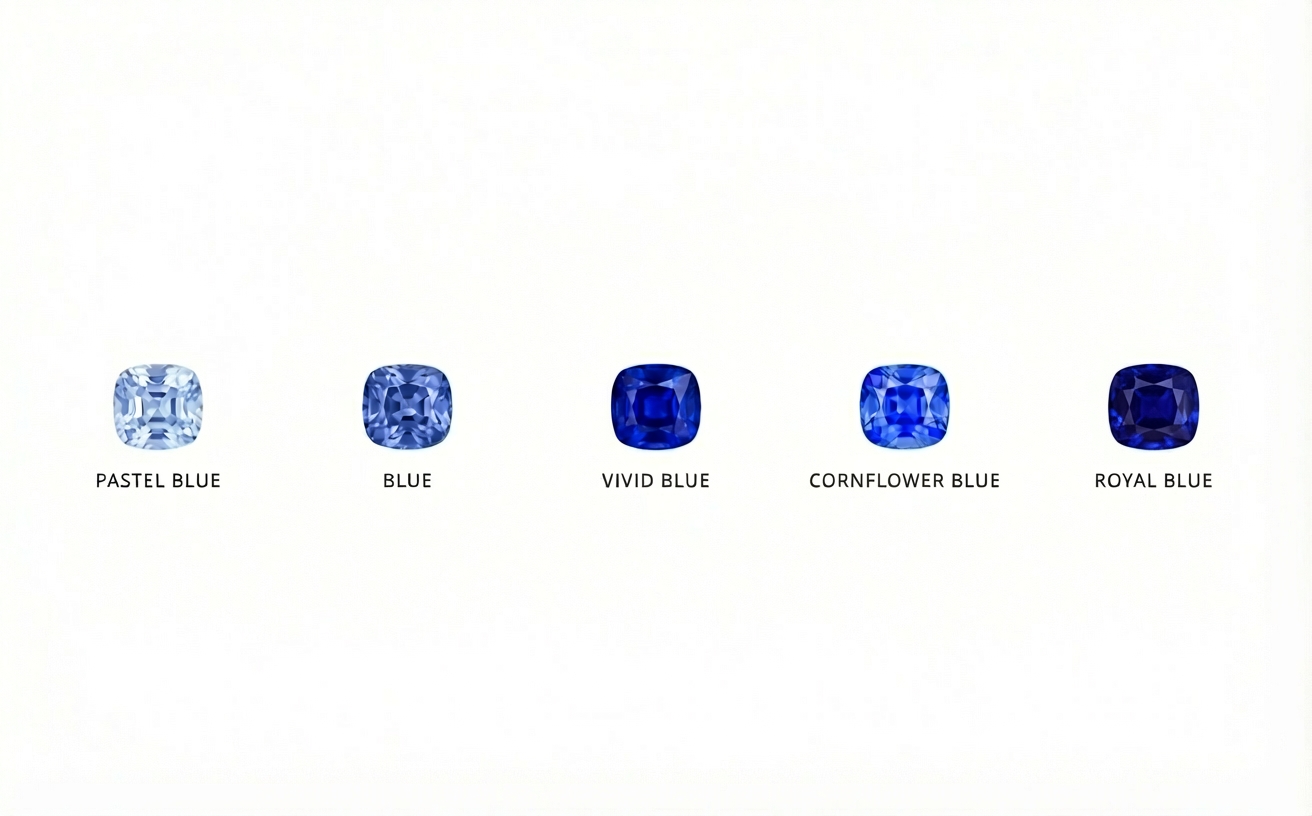
Investment-grade color starts at Cornflower Blue and above. Commercial material (Pastel, plain Blue) carries no scarcity premium.
For most investors entering the sapphire market in 2026, certified unheated Ceylon sapphires in the 3–7 carat range with GRS cornflower blue designation represent the best balance of quality, liquidity, and accessible entry point.
REALISTIC RETURN EXPECTATIONS
Sapphire investment returns are not comparable to equity markets. They are slow, illiquid, and require patience. But they are also largely uncorrelated to financial markets — a quality that has grown in appeal as traditional portfolio correlations have increased.
Historical averages for investment-grade Ceylon sapphires suggest 6–10% annualized appreciation over 10-year holding periods. Kashmir has averaged higher — 10–15% — but entry prices are substantially higher and the market is thinner.
These returns assume proper exit channels: auction houses or reputable specialist dealers. Selling to a local jeweler or on unspecialized platforms will typically return significantly less than market value.
The investment horizon should be 5–15 years minimum. Buyers expecting to flip sapphires in 1–2 years will typically lose money after transaction costs.
THE LAB-GROWN QUESTION
Lab-grown sapphires have grown significantly in commercial jewelry, displacing heated natural stones at the lower price points. This is worth understanding for investors — but it does not affect the investment-grade market.
Lab-grown sapphires are chemically identical to natural ones, but they carry zero rarity premium. The entire investment case for natural sapphires rests on scarcity — and lab-grown stones, by definition, have no supply constraint. Retail prices for lab-grown sapphires have dropped 80–90% since 2015 as production has scaled.
Investment-grade sapphires — certified natural, unheated, from premier origins — are not competing with lab-grown stones. The buyers are different, the use cases are different, and the price points are different by orders of magnitude. If anything, the growth of lab-grown has clarified the distinction between commodity sapphire and investment sapphire, which benefits the top of the market.
HOW TO BUY CORRECTLY
Only buy certified stones. GRS or Gübelin, current certificate, "no indications of heating" conclusion explicitly stated. No exceptions for investment purposes.
Verify the certificate directly. Both labs have online verification. Takes two minutes. Non-negotiable.
Understand the exit before you enter.Know your planned exit channel before buying. Auction houses, specialist dealers, or private collector networks. Without a planned exit, you don't have an investment — you have a collection.
Allocate appropriately. Gemstones should represent a modest portion of a diversified portfolio — typically 5–15% for investors who specifically want alternative asset exposure. They are not a replacement for liquid assets.
FREQUENTLY ASKED QUESTIONS
What annual returns have fine sapphires produced historically?
GRS-certified unheated Ceylon and Burma sapphires have produced average annual returns of 8–15% over the past decade, with top specimens appreciating 30–50% or more. These figures reflect auction results and private dealer transactions for investment-grade material.
What budget is needed to enter the investment-grade sapphire market in 2026?
Investment-grade sapphires start from $5,000–$15,000 for GRS-certified 1-carat unheated Ceylon stones. For the strongest appreciation potential, the $25,000–$100,000 range targeting 2–4 carat unheated Ceylon or Burma sapphires offers the best combination of liquidity, scarcity, and return potential.
Which sapphire origin offers the best investment potential in 2026?
Ceylon offers the strongest combination of quality, availability, and liquidity. Kashmir sapphires have superior prestige but extreme scarcity limits the market. For most investors, certified unheated Ceylon sapphires are the optimal 2026 entry point at $8,000–$25,000 per carat for fine quality.
How long should I plan to hold a sapphire investment?
Plan a minimum holding period of 5–10 years. Transaction costs — dealer margins, certification fees, and auction commissions — typically total 15–25%, requiring meaningful appreciation to break even. Sapphires held 10+ years at investment grade have consistently outperformed most alternative asset classes.
VIEW OUR INVESTMENT SAPPHIRES
The Sapphire Bank sources investment-grade sapphires with full disclosure and certification on request. Every stone comes with a clear provenance and rationale, backed by our 12-month buyback guarantee. Currently available: SPH-005 Cornflower Blue · 5.55ct and SPH-003 Midnight Kashmir · 4.05ct.